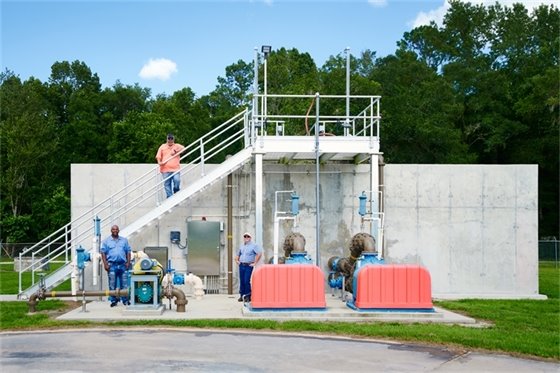
LIVE OAK, FLA., Dec. 28, 2020 – The strong, industrial structure known as the “digester” for the City of Chiefland, Fla., is a visual contrast to the majestic, natural springs a few miles away. But the active work of the digester is helping protect the springs, the area’s most valued natural resources.
A digester helps break down waste for a wastewater treatment plant. Making sure the local digester was doing its job and not wasteful in its work was a priority for the City of Chiefland and the Suwannee River Water Management District. The District manages water and related natural resources in north-central Florida by providing water quality and quantity monitoring, research, regulation, flood protection, and
land acquisition and management.
For a community nestled near the springs, projects like the digester support natural resource protection, and community partnerships help make them possible. The City of Chiefland worked in conjunction with the Suwannee River Water Management District and the Florida Department of Environmental Protection -- together, the partners were able to provide the expertise and funds to get this done. The $521,823 project was completed with $376,560 in Springs grant funds and a $145,263 cooperator match.
An efficient digester matters because it helps minimize the impact of nitrogen that can make its way into the groundwater. The water that makes its way into the local springs “recharges” away from the springs themselves in areas called “springsheds.” Due to the karst, sponge-like geology of Florida, preventing nitrates from making their way into the springs is especially important.
Most of the area’s water flow goes west and southwest underground. Dye projects have helped visibly show how the water travels. It all ties back to the springs. The new digester means fewer nitrates and better, more pristine water over several generations.
The tall concrete structure, more formally known as the City of Chiefland Nutrient Reduction-Biosolids Treatment Unit, “digests” biosolids. It takes remnants from wastewater production -- the biosolids -- and makes it possible for them to be treated and broken down even further. It is then applied to about 100 acres of hay fields or pasture land leased by the City of Chiefland.
Renovation of the digester reduces “land applied nutrient loading” to the Floridan Aquifer by approximately 600 pounds of nutrients per year. The project will reduce nitrogen loading on agricultural sites by approximately 400 pounds per year and phosphorus loading by approximately 200 pounds per year. The increased treatment of biosolids is also anticipated to reduce the volume of biosolids being land applied by approximately 5 to 10 percent.
Read more at www.MySuwanneeRiver.com.

 Share on Facebook
 Share on Twitter
 Share via Email
